
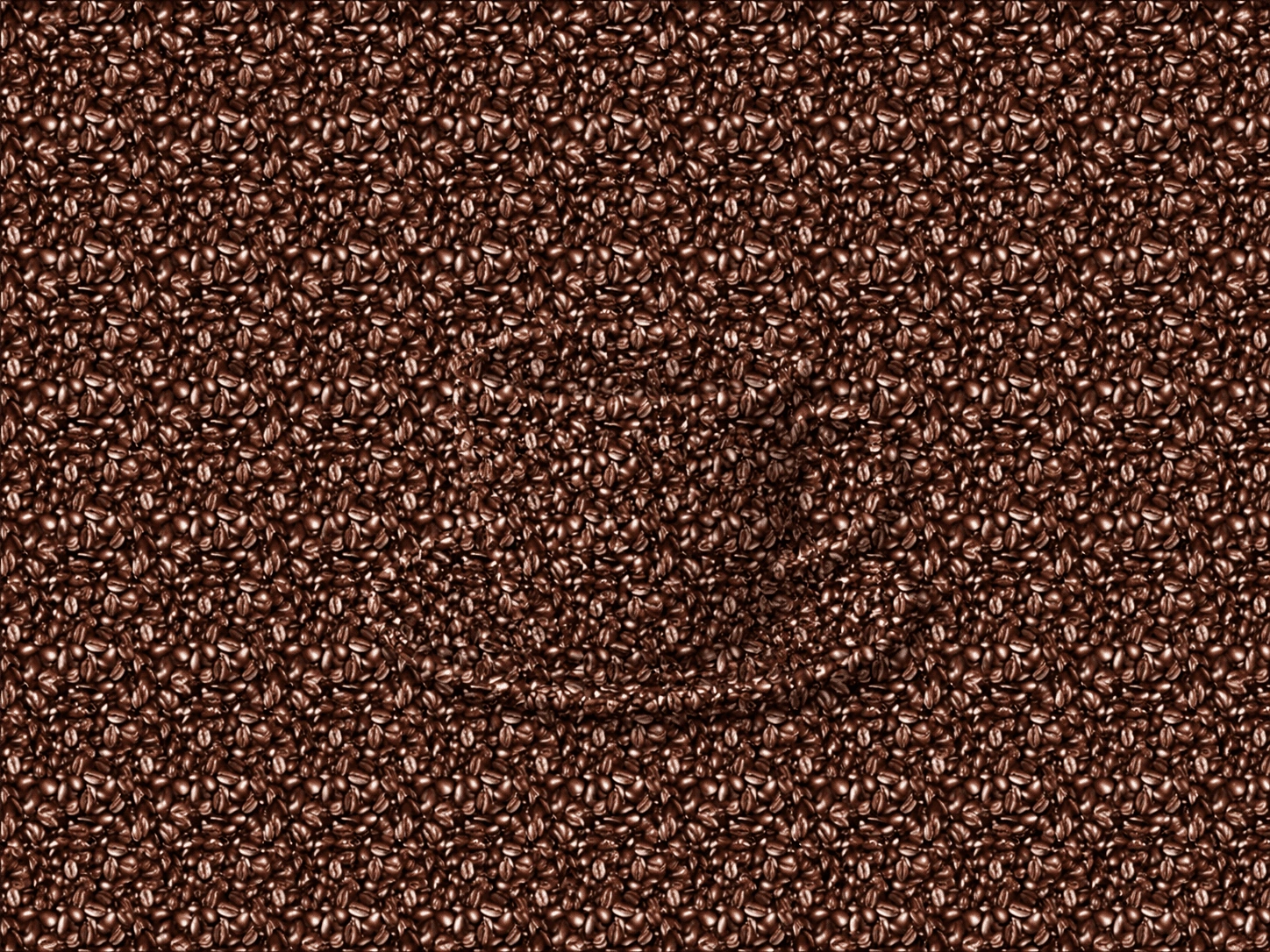
Have you ever looked at an image filled with colorful patterns or repeating shapes while someone insisted, "Keep looking—there's a hidden picture"?
At first, it seems like a joke. No matter how hard you stare, all you can see are random patterns. Then, suddenly, something incredible happens. A three-dimensional image appears as if by magic.
That's the fascinating power of a stereogram, one of the most remarkable optical illusions ever created. It proves that while our eyes are looking at exactly the same image, our brain can build an entirely different reality.
What is a stereogram?
A stereogram is a two-dimensional image that contains a hidden three-dimensional scene.
At first glance, it looks like nothing more than a collection of repeating patterns. However, when your eyes focus in a particular way, your brain detects tiny differences within those patterns and transforms them into the illusion of depth.
Perhaps the most surprising part is that the 3D image has never actually existed on the page or screen. It is entirely created by your brain using the information received from both eyes.
That's why two people can have completely different experiences when looking at the same stereogram. One person may see the hidden figure within seconds, while another might spend several minutes trying—or never see it at all.
The history of stereograms
Although stereograms became hugely popular during the 1990s, their origins go back much further.
In 1838, British scientist Sir Charles Wheatstone demonstrated that our perception of depth depends on each eye seeing a slightly different image. His invention, the stereoscope, became one of the earliest devices capable of creating a three-dimensional visual experience.
More than a century later, Hungarian-American neuroscientist Béla Julesz revolutionized vision science by developing the first random-dot stereograms during the 1960s. His work showed that the brain could reconstruct depth even when it could not immediately recognize objects within an image.
In the early 1990s, the famous Magic Eye books introduced stereograms to millions of people around the world. Their colorful patterns concealed dinosaurs, animals, buildings, and countless other three-dimensional images that only appeared when viewers learned how to focus correctly.
How does a stereogram work?
Our eyes are positioned a few centimeters apart, allowing each one to see the world from a slightly different angle.
The brain combines these two images to calculate distance and depth. This process, known as binocular vision, is what allows us to catch a ball, judge distances, and move safely through our surroundings.
Stereograms cleverly take advantage of this natural ability.
The repeating patterns contain tiny visual differences that are almost impossible to notice consciously. When you relax your focus and look "through" the image instead of directly at it, each eye processes a different section of the pattern. Your brain then combines these subtle differences and creates the illusion of a hidden three-dimensional object.
The illusion isn't actually inside the image.
It's created entirely inside your brain.
Why can't everyone see them?
One of the most common questions about stereograms is why some people see them almost instantly while others struggle.
The answer lies in the way we focus our eyes.
Normally, we focus directly on whatever we're looking at. With a stereogram, however, you must do the opposite: look beyond the image, as if focusing on a point somewhere behind it.
Many people find these simple steps helpful:
- Hold the image close to your face.
- Relax your eyes without trying to focus on the details.
- Slowly move the image away while keeping your gaze relaxed.
- Wait a few seconds until the hidden 3D image appears.
There is no fixed amount of time required. Some people discover the image almost immediately, while others need several attempts. Once your brain learns the technique, however, it usually becomes much easier to see stereograms in the future.
Much more than just entertainment
Although stereograms became widely popular as a fun pastime during the 1990s, they have also played an important role in scientific research and the development of modern technologies.
Researchers continue to use them to better understand how the brain perceives depth and combines the slightly different images received by each eye into a single three-dimensional view.
Some of their most interesting applications include:
- Neuroscience research. Stereograms help scientists study how the brain reconstructs three-dimensional scenes and processes spatial information. They have revealed that our sense of depth is created by the brain even before it recognizes the objects we are looking at.
- Ophthalmology and vision training. Eye specialists sometimes use stereograms to evaluate binocular vision—the ability of both eyes to work together effectively. In certain cases, they are also incorporated into visual exercises designed to improve eye coordination or help identify depth perception disorders.
- Virtual and augmented reality. The principle behind stereograms is remarkably similar to the technology used in virtual reality headsets. Each eye receives a slightly different image, and the brain combines them to create the illusion of a three-dimensional environment.
- Video games, 3D animation, and filmmaking. Modern 3D graphics rely on the same visual concept: convincing the brain to perceive depth on a completely flat screen. While today's technology is far more sophisticated, it is built on the same principles of binocular vision that stereograms demonstrate.
- Science communication and education. Museums, science centers, and classrooms frequently use stereograms to explain how human vision works. They provide a simple yet engaging way to introduce concepts such as binocular vision, depth perception, and visual processing, making complex scientific ideas easier to understand.
Far from being just a visual puzzle, stereograms continue to help scientists, doctors, designers, and educators better understand one of the most remarkable abilities of the human brain: its capacity to construct the three-dimensional world we experience every day.
What do stereograms teach us about perception?
We often believe that our eyes show us the world exactly as it is.
Stereograms prove that vision depends not only on what our eyes receive but also on how our brain interprets that information.
The hidden image has always been there. It doesn't suddenly appear—it simply becomes visible once your brain learns how to process the visual information differently.
Perhaps that is the greatest lesson stereograms offer: sometimes, changing the way we look at something is enough to discover an entirely new reality.
Discover stereograms at the Museum of Illusions
Seeing a stereogram on a screen is fascinating. Experiencing it alongside dozens of other mind-bending illusions is even more unforgettable.
At the Museum of Illusions Madrid, you'll discover how your brain creates three-dimensional images, challenges your visual perception, and transforms simple patterns into scenes full of depth.
Each exhibit encourages you to see the world from a different perspective while exploring the science behind human perception through fun and interactive experiences. If you're looking for one of the most unique things to do in Madrid, the Museum of Illusions is the perfect place to discover just how extraordinary your mind really is.

