
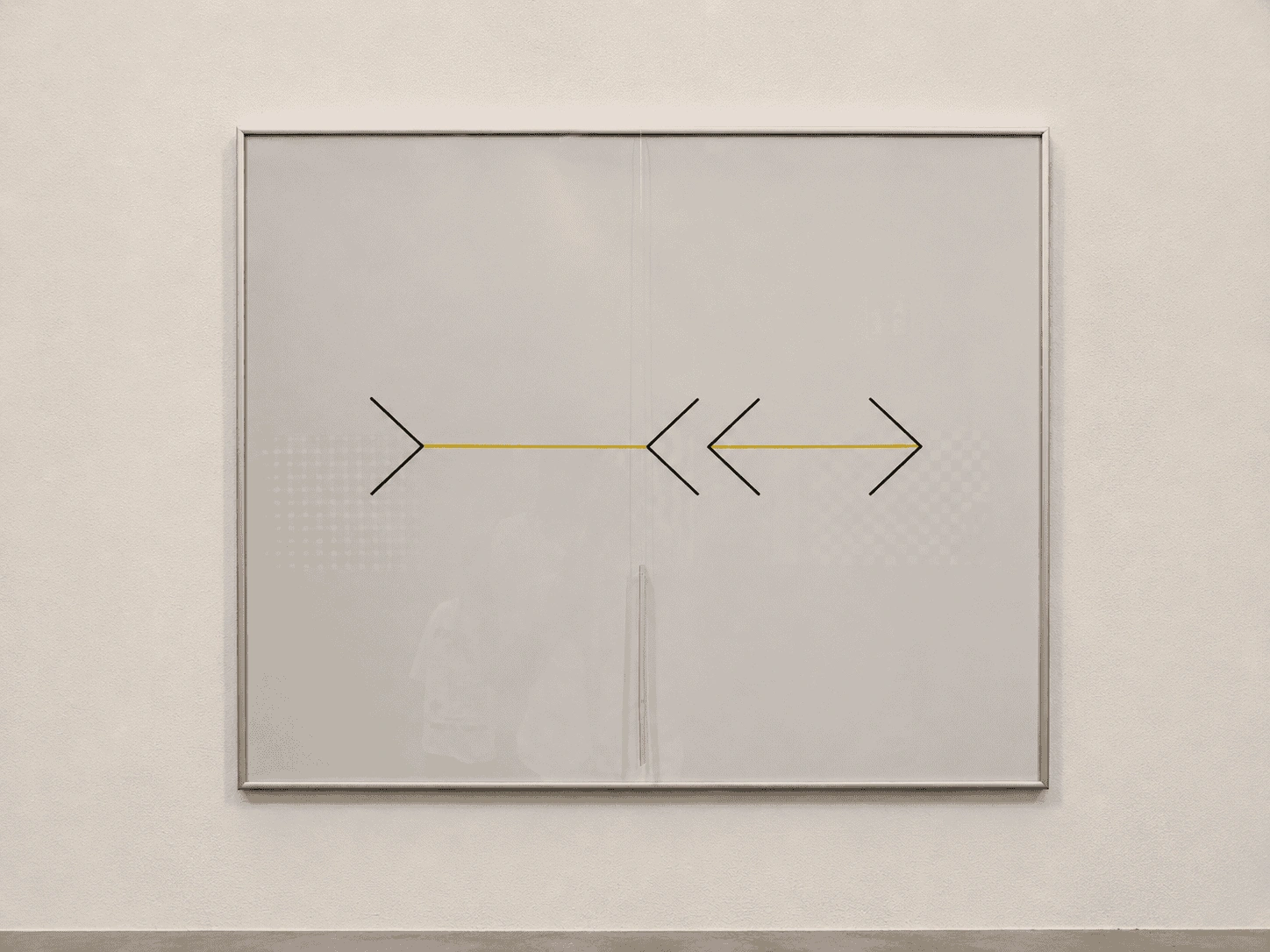
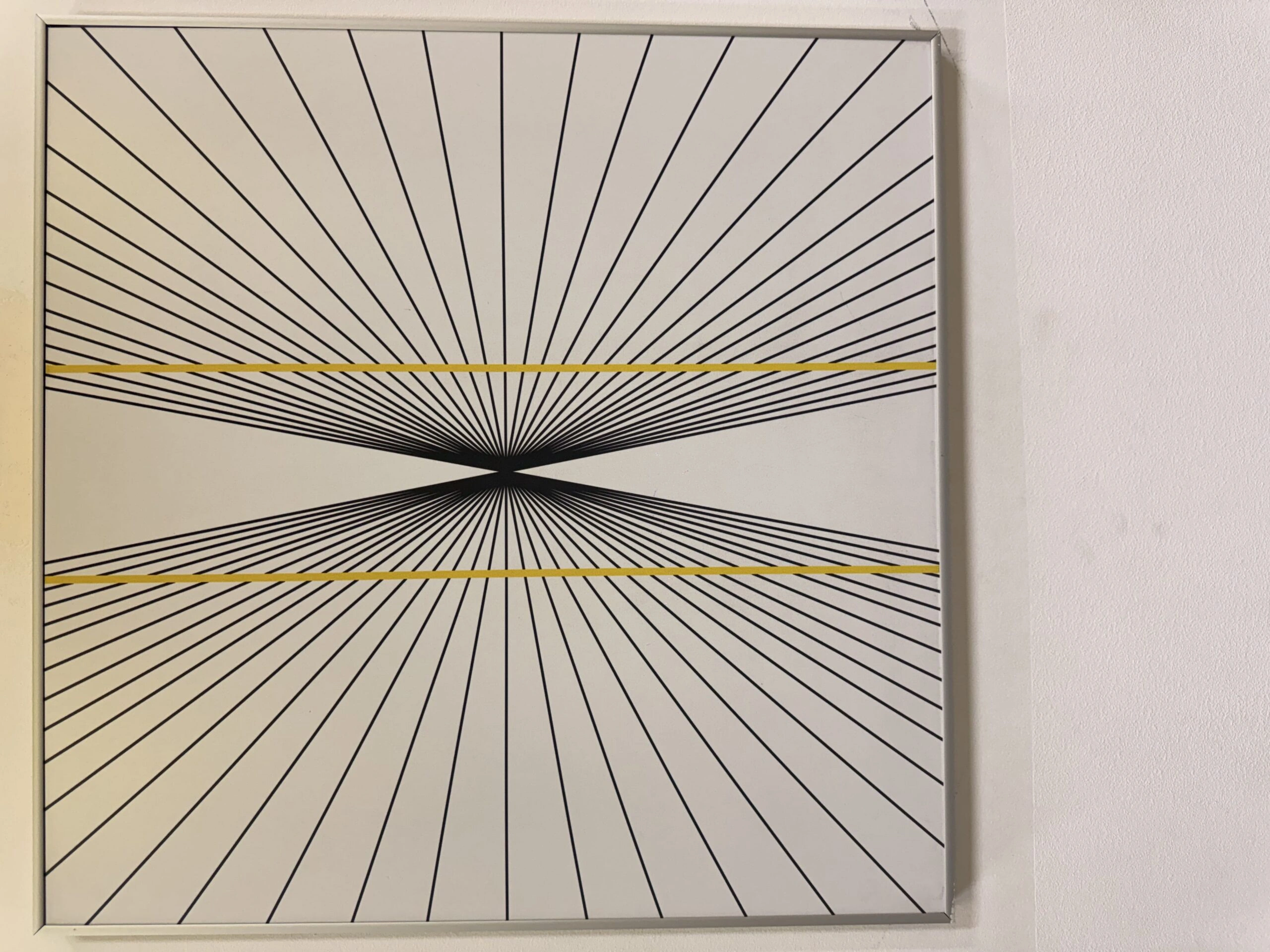
Two objects can measure exactly the same and still appear completely different. This is the effect of the Ponzo illusion, one of the best-known optical illusions used to demonstrate how the brain interprets perspective.
What is most surprising is that even when you know both objects are the same size, the illusion still works.
This happens because the brain does not simply measure what it sees: it also interprets the context surrounding the images.
What is Ponzo's illusion?
The Ponzo illusion is a visual effect in which two identical objects appear to be different sizes because of the lines and perspective surrounding them.
It is usually represented by two horizontal lines placed on a background that suggests depth, such as railway tracks narrowing towards the horizon.
Although both lines are exactly the same length, the one that appears to be farther away is perceived as larger.
Who discovered this optical illusion?
The illusion was described in 1911 by the Italian psychologist Mario Ponzo, who studied how the brain uses perspective to calculate sizes and distances.
His discovery helped demonstrate something important: human perception does not work like a camera that records exact images.
The brain constantly interprets visual information based on previous experiences and learned rules about space and depth.
How the Ponzo illusion works
The brain is used to living in a three-dimensional world. When we see converging lines, such as a road or railway tracks, we automatically interpret them as indicating depth.
In the Ponzo illusion, this sense of distance tricks the brain.
The line that appears to be farther away should look smaller if it were physically the same size as the nearer line. Since it does not, the brain assumes that it must be larger.
Although the eyes receive two identical lines, the mind adjusts our perception so that it fits its interpretation of space.
Why does the brain fall for this illusion?
The human mind is constantly trying to make sense of what it sees. To do this, it uses mental shortcuts based on experience, perspective and context.
The Ponzo illusion takes advantage of precisely this mechanism.
The brain prioritises information about depth over actual measurements. That is why our perception changes even when we rationally know that both objects are the same size.
It is a clear demonstration that seeing does not always mean perceiving reality accurately.
The relationship between perspective and optical illusions
Many optical illusions work because of perspective. The size, distance and position of objects can change completely depending on the context surrounding them.
This also happens in photography, architecture and art. Sometimes an object appears enormous or tiny simply because of the angle from which we observe it.
The Ponzo illusion shows how the brain combines visual information to construct a coherent interpretation of the world, even when that interpretation is incorrect.
Perspective and perception
At the Museum of Illusions of Madrid, many experiences play with perspective and size in exactly the same way as the Ponzo illusion.
The interactive installations are designed to make the brain constantly question what it is seeing. Tilted rooms, objects that change size and impossible settings turn visual perception into part of the fun.
The experience allows visitors to understand how optical illusions work in a practical, entertaining and interactive way.
That is why it is one of the most original things to do in Madrid for families, friends, couples and curious visitors.