
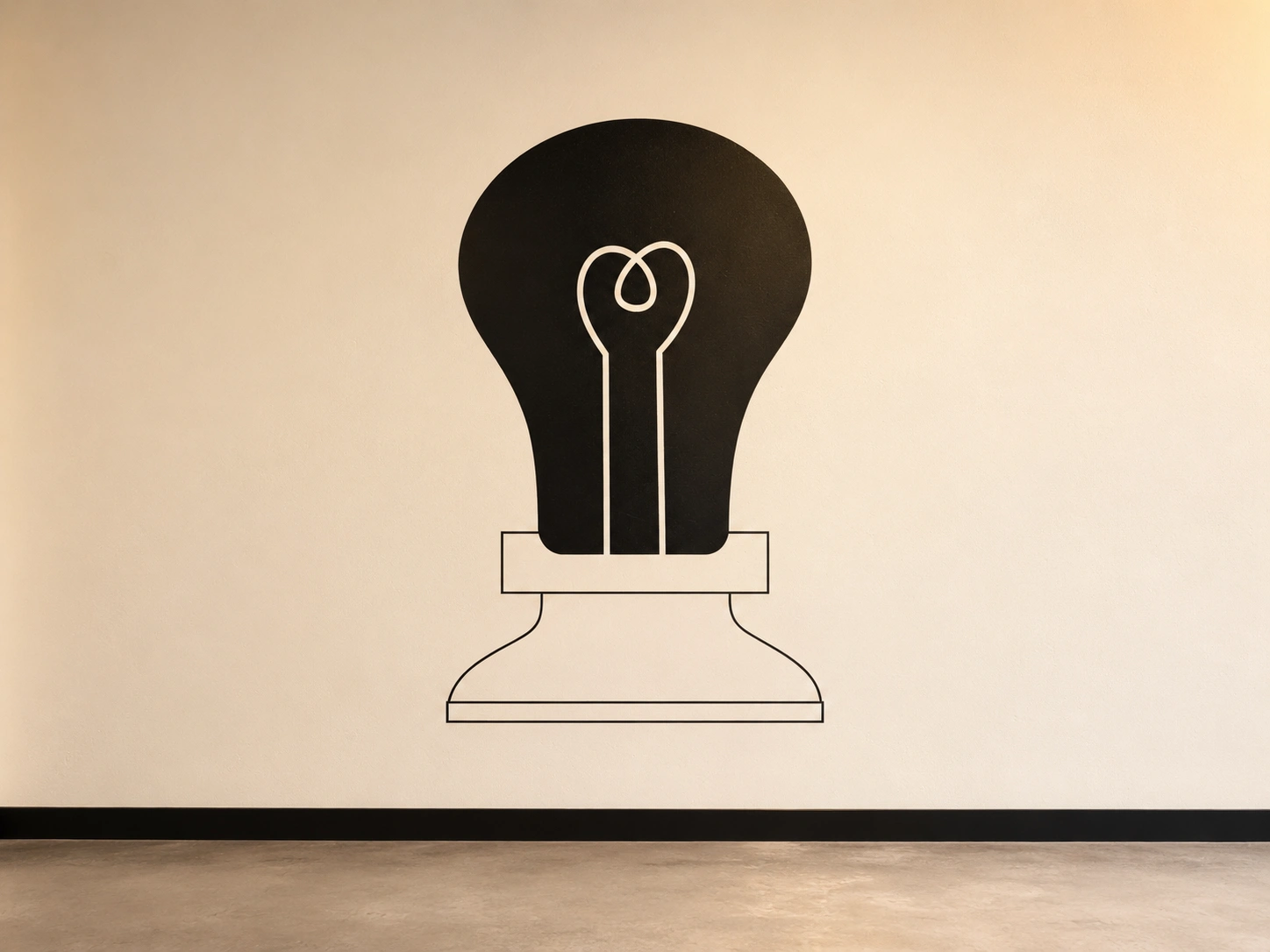
You stare at a bright light bulb for a few seconds. Then you look away toward a white wall… and the image is still there.
Even though the bulb is no longer in front of you, you continue seeing a glowing shape floating for a few moments. It may seem strange, but it happens to almost everyone.
This visual phenomenon is known as a lingering image or retinal persistence, and it shows that the brain does not stop seeing at the exact moment we stop looking.
What is the lingering light bulb illusion?
The lingering light bulb illusion is an image that appears after staring at a bright light source for a few seconds.
When you shift your gaze toward a neutral or light-colored surface, your eyes continue perceiving a temporary glowing “trace.”
The image may appear bright, dark, blurry, or even with inverted colors before slowly fading away.
It is not imagination. It is a real reaction produced by the visual system.
Why do we keep seeing the image?
Inside the retina are cells called photoreceptors, responsible for capturing light and sending information to the brain.
When we look at an intense light source, some of these receptors become overstimulated and need a few seconds to recover. During that time, they continue sending residual visual signals.
The result is the lingering image that seems to remain floating in front of us even after the original object has disappeared.
It is almost as if the eye temporarily stores a photograph of the last thing we saw.
The discovery of retinal persistence
This phenomenon had been observed for centuries, but during the 19th century scientists and physicists began studying how the brain interprets images and motion.
One of the most important researchers was Belgian physicist Joseph Plateau, a pioneer in the study of visual perception.
His experiments helped demonstrate that the eye retains images for tiny fractions of a second, something that later became essential for the birth of cinema and animation.
Thanks to these discoveries, some of the first optical devices capable of creating the illusion of movement appeared long before modern films existed.
The connection between this illusion and cinema
Retinal persistence helped explain why a rapid sequence of still images can appear as continuous motion.
When we watch a movie, the brain combines dozens of individual frames every second and interprets them as moving scenes.
Although today we know that motion perception is more complex, this optical illusion became one of the foundations that helped develop cinema, animation, and many visual effects still used today.
Visual persistence
At the Museum of Illusions Madrid, you can experience the lingering light bulb illusion for yourself and discover how your eyes continue seeing an image even after it has disappeared.
It is one of those experiences that surprises visitors because the effect happens directly inside your own vision. For a few seconds, your brain continues interpreting a light that is no longer actually there.
These kinds of illusions transform the visit into a fully interactive experience where lights, reflections, and visual effects constantly challenge your senses while showing just how easily perception can be fooled.