
Every year on 18 May, the world is reminded that museums are not just buildings with things inside. They are places where something changes in you, even if only a little. International Museum Day exists precisely for that: to invite you to cross a door you may have been ignoring for a while and discover that on the other side there is much more than you expected.
Madrid knows this well. The city has a cultural offering that few European capitals can match, and 18 May becomes the perfect setting to explore it in a different way. But within that map there is a type of experience that keeps surprising those who live it for the first time: one that does not put you in front of a work of art, but in front of yourself.
What makes a museum experience truly different
There are visits you forget the next day. And there are visits you keep telling people about weeks later.
The difference is not in the size of the space or the fame of what it holds. It lies in whether what you experienced made you think, feel or question something you had always taken for granted. That kind of immersive experience leaves a mark because it is not passive: it involves you, unsettles you, makes you take part without even asking.
At the Museo de las Ilusiones in Madrid, that happens from the very first moment. Optical illusions are not cheap tricks or fairground entertainment. They are windows that show how the brain processes reality: taking shortcuts, completing information that does not exist, choosing one interpretation when it could choose several.
When you are standing in front of an image you swear is moving and it is not, something shifts. It is not discomfort — it is active curiosity. And active curiosity is, according to neuroscience, one of the most favourable states for learning and memory.
When your brain is the main character
There is an enormous difference between reading about perception and being in the middle of it.
Walking into a room where the architecture distorts your sense of size, seeing how two identical colours look completely different depending on the background around them, or losing your balance in an environment designed to confuse the vestibular system: none of these things can be fully explained in words. You have to live them.
It is not about contemplating. It is about taking part, laughing at yourself when you realise your brain has been tricking you all along, and leaving with a question you did not have before: how much of what I perceive every day is real, and how much is just interpretation?
Once that question gets in, it does not leave easily.
Plans in Madrid that surprise people of any age
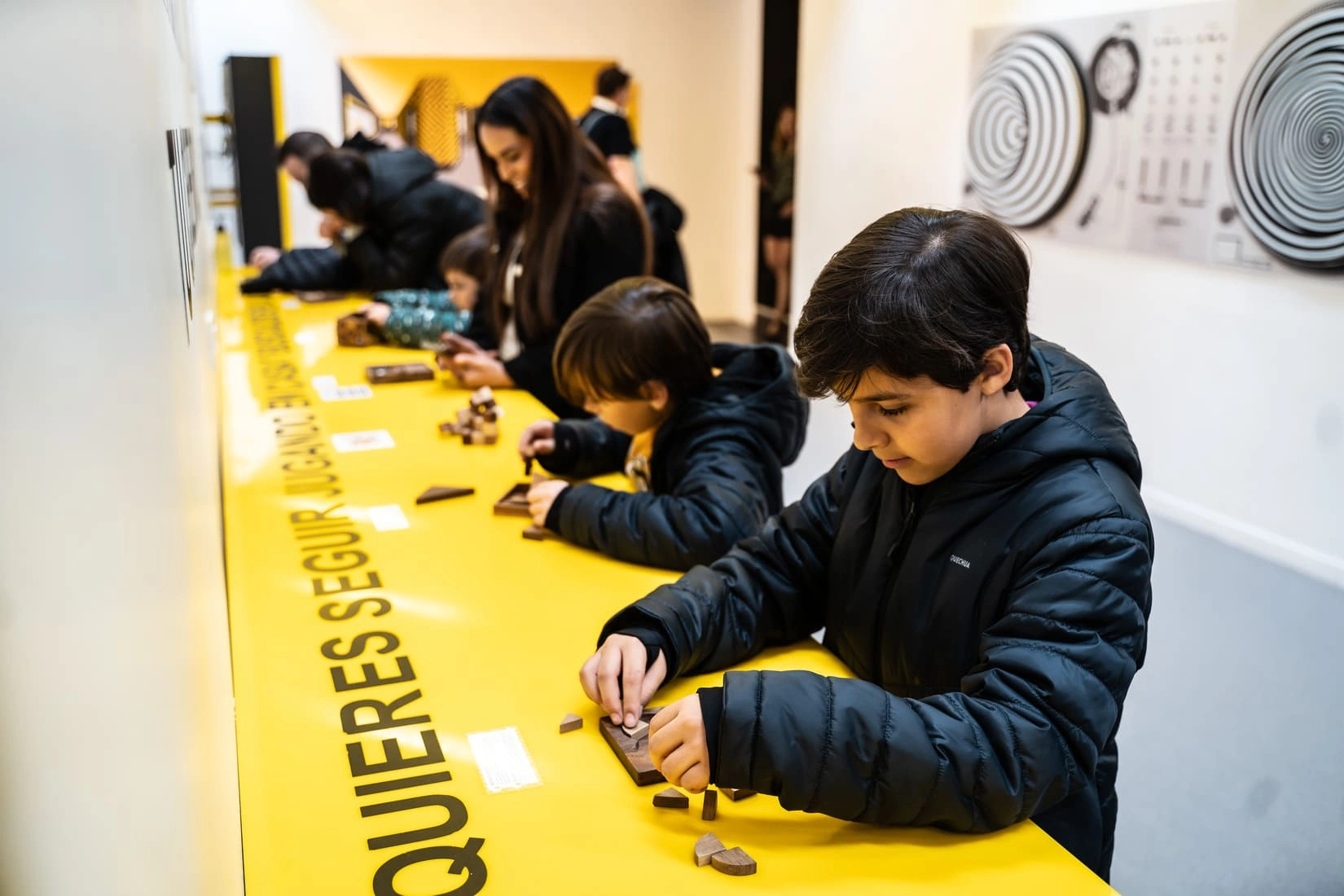
One of the most striking things about this kind of visit is that it does not care about age or prior knowledge. An eight-year-old and a forty-year-old experience exactly the same surprise standing in front of the same installations. The brain, in these cases, works the same for everyone.
That makes it one of those plans that genuinely works in a group: with family, with friends, as a couple or with whoever wants to join. There are no experts or beginners. Just people looking and wondering how what they are seeing is even possible.
18 May is a good reason to remember that learning can be a physical, emotional and completely surprising experience. If you want to live it for yourself, the Museo de las Ilusiones in Madrid is waiting for you.
A bit of context
International Museum Day has been celebrated every 18 May since 1977, driven by the International Council of Museums. In 2026 the chosen theme is "Museums uniting a divided world", an idea that reclaims these spaces as meeting points between people of different backgrounds. A reminder that culture, when truly experienced, always brings people together.