
Have you ever seen a child go completely quiet… just because something does not make sense at first glance?
A picture that seems to move. A line that looks longer even though it is not. A mirror reflecting something that should be impossible.
That is where curiosity begins.
Visual experiments for kids have a unique way of capturing attention. They do more than surprise children, they make them ask questions. And once a child starts asking why, learning becomes something exciting rather than something they have to do.
That is the magic behind fun science for kids: it turns confusion into curiosity, and curiosity into discovery.
Why Visual Experiments Fascinate Children
The brain does not simply record reality as it is. It constantly interprets what it sees, fills in missing information, and makes quick assumptions based on patterns and past experience.
In children, this process is even more fascinating because their understanding of the world is still developing. Every new visual challenge becomes an opportunity to explore, question, and learn.
That is why visual science activities can be so powerful. They instantly break expectations, grab attention, and lead to one simple question:
Why is this happening?
And that question is often the first step toward real scientific thinking.
When Seeing Is Not Believing
Some of the best visual experiments for kids are built around a simple idea: what we see is not always what is really there.
Two lines can be exactly the same length, yet one appears longer. A flat image can seem as though it is moving. A reflection can create a version of reality that feels completely wrong.
These effects are not just entertaining. They reveal something important about how the brain works.
What Is the Brain Really Doing?
To process the world quickly, the brain relies on shortcuts. Instead of examining every detail from scratch, it uses context, comparison, and previous experience to make fast decisions about what something must mean.
For example:
• If something looks farther away, the brain may assume it is larger
• If an object is surrounded by shapes or lines, the surrounding context changes how we interpret it
• If a pattern suggests movement, the brain may continue that motion even when nothing is actually moving
Most of the time, these mental shortcuts help us make sense of the world. But sometimes, they create illusions.
And that is exactly why optical illusions and visual experiments for kids are such effective learning tools: they make children realize that perception is not always reality.
Simple Visual Experiments That Make Kids Think
You do not need a lab full of equipment to make science exciting. Sometimes the most powerful experiments are also the simplest.
A few easy examples include:
• Drawing two identical arrows with the ends pointing in opposite directions
• Focusing on one point and noticing other details disappear
• Exploring reflections with mirrors and unusual angles
• Playing with perspective to make objects or people look bigger, smaller, closer, or farther away
The real value is not just in the illusion itself. It is in the reaction it creates.
That moment when a child says: “That cannot be right.”
That is the moment they begin to observe more carefully, think more critically, and question what they are seeing.
Without even realizing it, they are already thinking like young scientists.
How Visual Science Builds Curiosity and Learning
Many children do not lose interest in learning because they dislike knowledge. They lose interest when learning stops feeling surprising.
When everything feels predictable, attention fades. But when something challenges the way they see the world, the brain switches back on.
That is why visual experiments for kids are so valuable. They bring wonder back into the learning process.
They also help children develop important skills, including:
• Observation
• Critical thinking
• Problem-solving
• Creativity
• Curiosity-driven learning
Learning how the brain interprets images also teaches children something bigger: that it is okay to question what seems obvious.
From Simple Experiments at Home to Immersive Experiences
Sometimes a drawing on paper is enough to create that spark. Other times, the experience becomes much bigger.
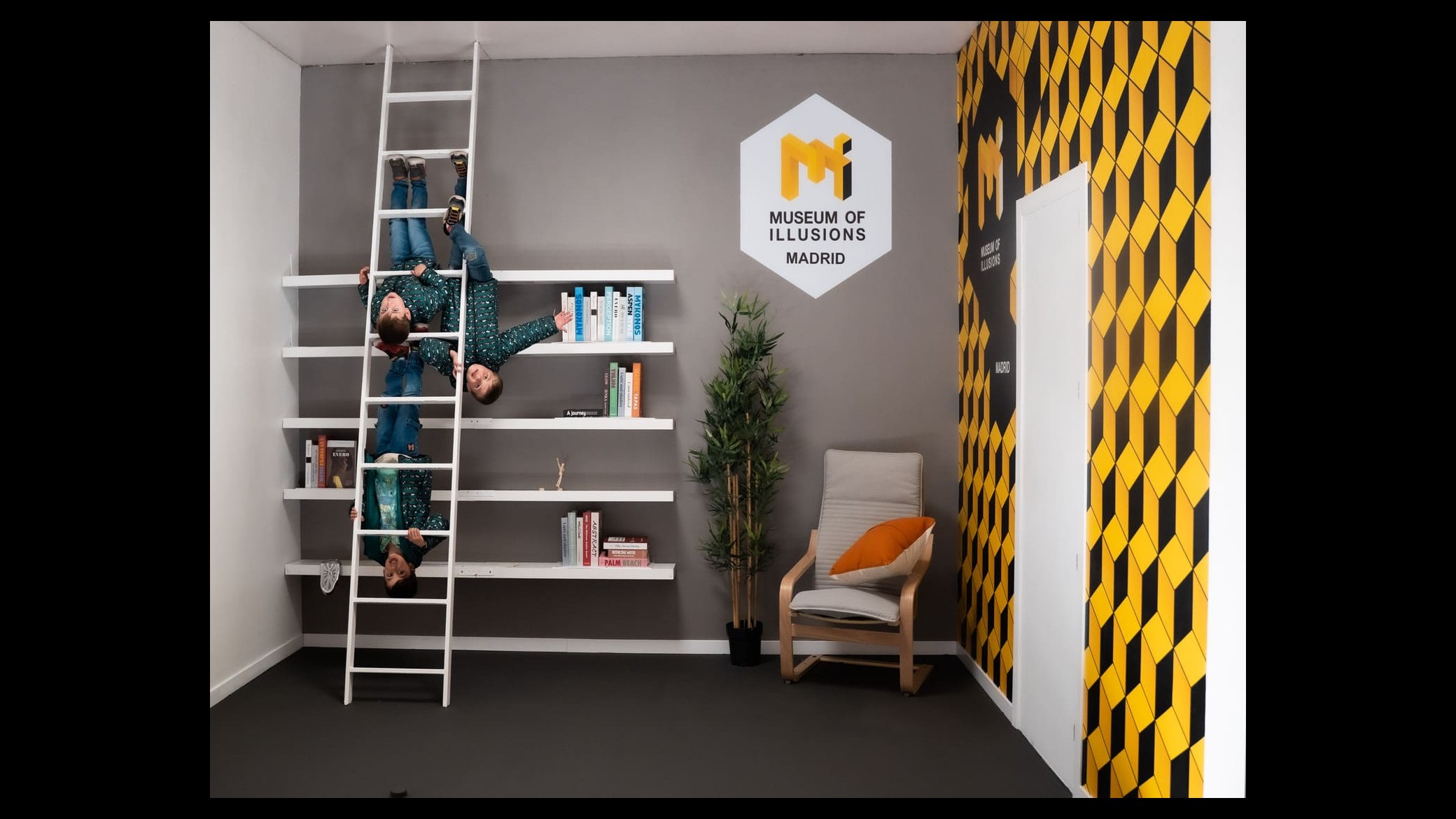
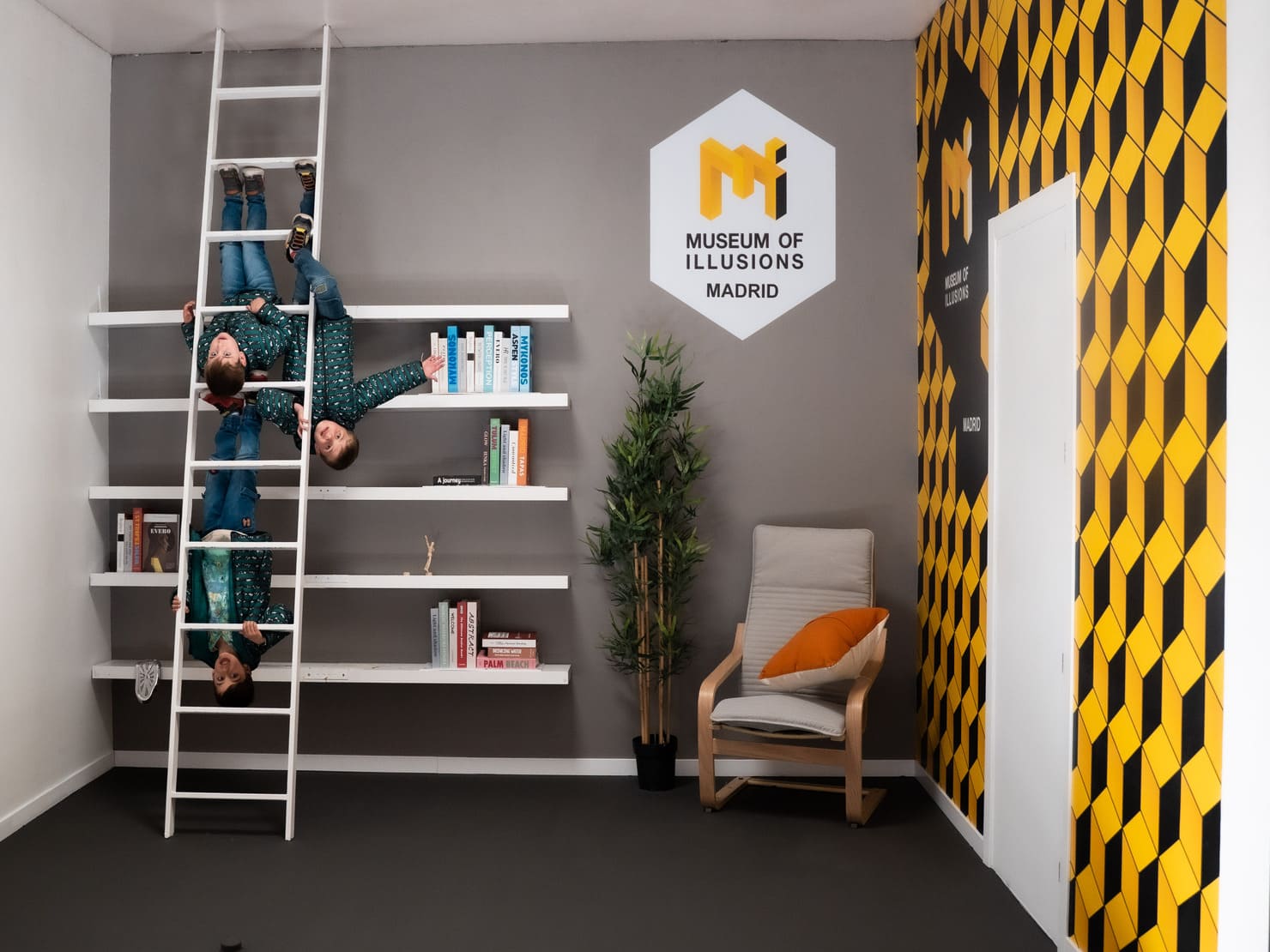
Imagine walking into a room where you suddenly look taller or smaller. Trying to keep your balance in a space that appears tilted. Looking in a mirror and seeing a version of yourself that does not feel quite real.
At that point, the illusion is no longer something children simply observe. It becomes something they experience with their whole body.
That is when science becomes unforgettable.
Discover Fun Science for Kids in Madrid
In Madrid, there are places where visual experiments and optical illusions become even more exciting. Places where children can explore science through experience rather than explanation alone.
Spaces where every room challenges perception, sparks new questions, and encourages families to discover how the mind really works.
If you are looking for fun science for kids in Madrid, the Museum of Illusions Madrid offers an interactive experience full of surprising visual effects, immersive spaces, and hands-on discoveries that children and adults can enjoy together.
It is a place where curiosity keeps growing with every step.